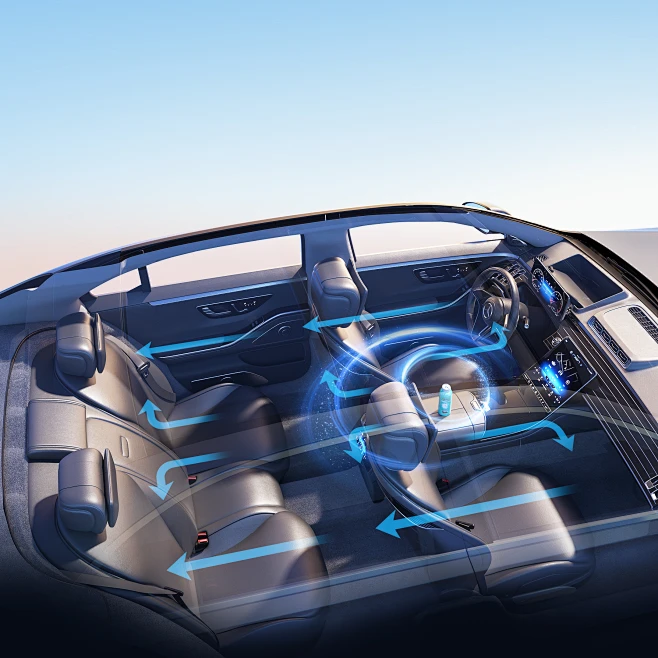
Introduction to New Energy Vehicles

How EV Electric Air Conditioner Works

Unlike traditional fuel vehicle air conditioners driven by engine belts, an EV electric air conditioner runs entirely on electric power. It uses an electric scroll compressor instead of a mechanical compressor, which is the core difference between new energy vehicle HVAC systems and traditional AC systems.
The working principle of an EV electric air conditioner is simple and efficient. The electric compressor compresses refrigerant gas to create high-temperature and high-pressure gas. After heat dissipation through the condenser, the refrigerant turns into liquid. The liquid refrigerant flows through the expansion valve and evaporator, absorbing cabin heat and producing cool air. The whole cycle runs independently without relying on vehicle engine speed.
Modern EV HVAC systems also integrate intelligent battery thermal management functions. In summer, the system cools down the vehicle cabin and stabilizes battery temperature to prevent overheating. In winter, the heat pump system absorbs ambient heat to provide cabin heating with low energy consumption.
Electric vehicle air conditioners support 12V, 24V and high-voltage customized versions, widely applied in electric buses, electric trucks, RV campers and engineering new energy vehicles. With low noise, low power consumption and stable performance, electric AC systems have become the standard configuration for new energy commercial vehicles.

DC 24V Parking Air Conditioner Installation Guide

A 24V DC parking air conditioner is the most popular cooling solution for heavy-duty trucks, large RVs and engineering vehicles. It allows drivers to enjoy continuous cooling while parking with the engine turned off, saving fuel and protecting the original vehicle engine. This complete installation guide helps you install the DC parking air conditioner correctly and avoid common errors.

Step 1: Confirm Vehicle Voltage System

Before installation, confirm your vehicle supports a standard 24V DC power system. Do not install a 24V air conditioner on a 12V vehicle system, which will cause insufficient cooling and circuit damage. For light vehicles and small vans, 12V parking air conditioners are more suitable.

Step 2: Fix Evaporator and Condenser

Install the evaporator inside the vehicle cabin to ensure smooth air circulation. Fix the condenser on the vehicle roof or outside chassis, keeping it away from high-temperature engine parts to guarantee heat dissipation efficiency.

Step 3: Connect Refrigerant Pipes and Wiring

Connect the copper pipes between the evaporator and condenser tightly to prevent refrigerant leakage. Match the positive and negative poles strictly during wiring. The 24V DC system features lower current loss and more stable operation compared with 12V models during long-time parking cooling.

Step 4: Test Operation

After installation, turn on the air conditioner for a 15-minute test run. Check cooling effect, noise level and circuit stability. The intelligent low-voltage protection system will automatically shut down the unit when the battery voltage is too low to avoid battery drain.
Our 24V DC parking air conditioner supports plug-and-play installation, comes with complete installation accessories, and provides professional installation guidance for global wholesale and retrofit customers.

Leave a Reply

Your email address will not be published. Required fields are marked *